
THE HEART OF VALUES · READER RESOURCES
Companion Resources
Printable tools, reflections, and practices to help you bring what matters into everyday life.
A COMPANION TO THE BOOK
Making the Work Your Own
The Heart of Values is meant to be more than something you read. It’s an invitation to reflect, explore, practice, and return to what matters — in your own way, and at your own pace.
Here you’ll find shorter, web-friendly reflections and practices drawn from ideas explored more fully in the book, along with additional tools and resources to support your journey. The book offers the fuller exploration, context, and guidance.
You don’t need to complete everything or work through it in a particular order. Start with what feels useful, take what serves you, and return whenever you’re ready.
For readers who want more room to work with the book, the Companion Resource Pack offers selected printable worksheets, reflection pages, and full-colour reference materials, available through a free email sign-up.
A GENTLE REMINDER
You don’t have to get this right. The purpose of these practices isn’t to produce perfect answers, but to deepen your awareness, strengthen your connection with yourself, and explore how you want to live what matters.
EXPLORE THE RESOURCES
Where Would You Like to Begin?
Feelings Wheel
Understand your emotional landscape.
Discover Your Values
Explore what matters most.
Values & Needs
Explore what nourishes and protects.
One Degree Shift
Bring your values into action.
Values Assessments
Additional tools for exploring your values.
Companion Resource Pack
Printable and reusable worksheets.
EMOTIONAL AWARENESS
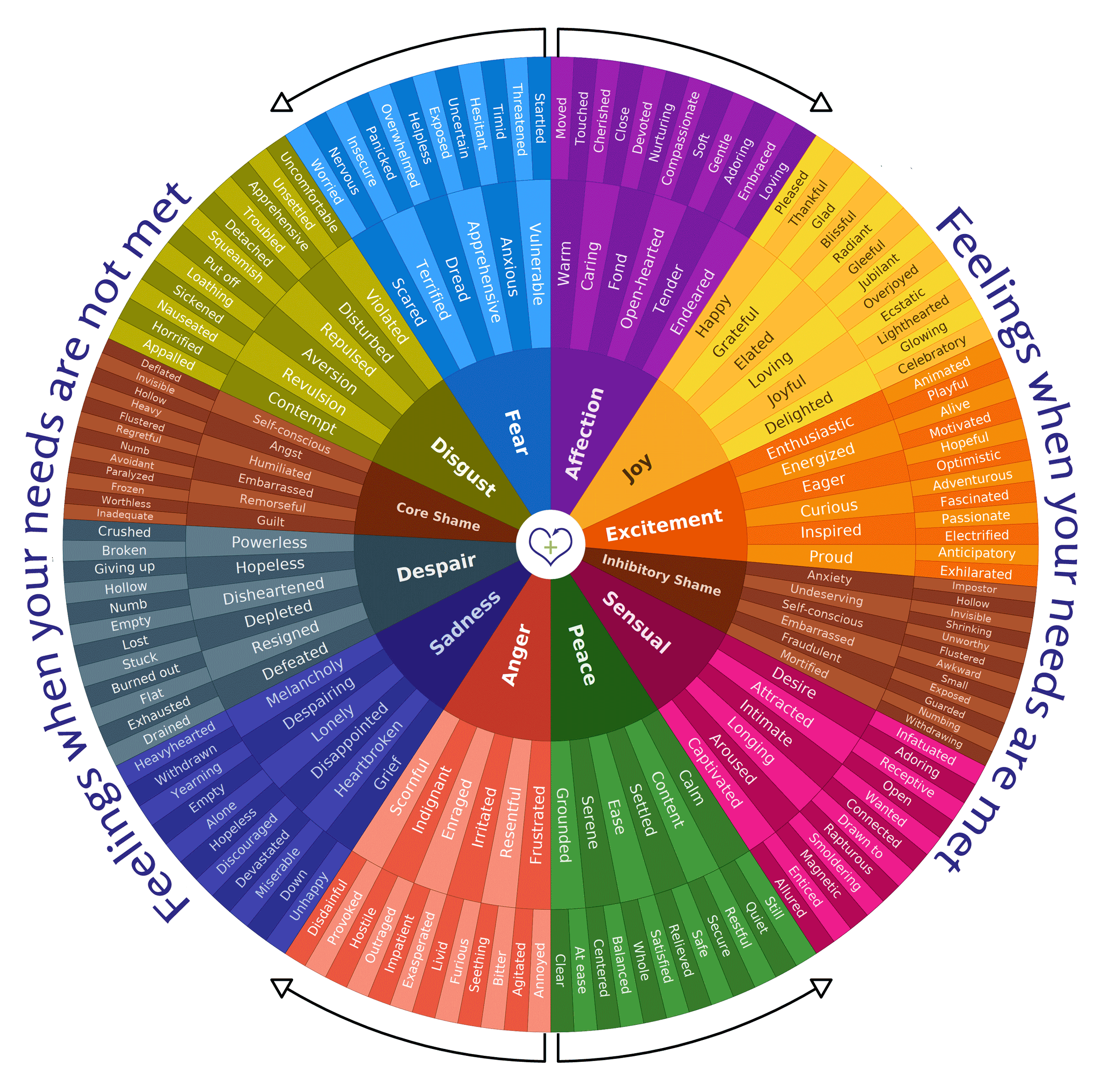
The HeartRich Feelings Wheel
Sometimes you know something is happening inside you, but finding the words isn’t easy.
Explore your emotional landscape, give language to what you’re experiencing, and begin understanding the needs and values that may be involved.
VALUES DISCOVERY
Discover What Matters Most
Sometimes the best place to begin isn’t with a list of values, but with your own experience.
Think of a moment when you felt particularly alive, connected, fulfilled, or simply like yourself. It doesn’t need to be a major life event. Often, the quieter moments tell us just as much.
A Moment Worth Exploring
- What was happening? What made this moment meaningful?
- What mattered most to you in that experience?
- What values might have been present?
- How are those values showing up in your life today?
You don’t need to arrive at a perfect answer. Notice the words and themes that emerge. They may offer a starting point for understanding what truly matters to you.
Sometimes a Little Language Helps
You don’t have to begin by choosing words from a list. But once you’ve reflected on meaningful experiences, seeing a range of values can help you recognize and name what was present. Let the words spark recognition rather than dictate what you should value.
This list is a starting point, not a boundary. Your values may be expressed in words that don’t appear here — or in meanings that are uniquely your own.
VALUES & NEEDS
What Does Living This Value Give You?
Your values help orient how you want to live. Your needs are what nourish, support, and sustain your wellbeing. They’re deeply connected, but they’re not the same thing.
Sometimes a genuine value also carries a need for safety, belonging, recognition, or autonomy. Understanding that connection can help you live the value with greater freedom and choice.
What's Beneath This Value?
Choose a value that matters deeply to you — perhaps one you find yourself defending, pursuing, or struggling to honour.
- What does living this value give me?
- What need might it nourish or help protect?
- When does this value become especially urgent, rigid, or difficult to compromise?
- What else matters here that I might be losing sight of?
- How could I live this value with greater choice and flexibility?
The same value can be lived in very different ways. Understanding what it gives you — and what it may be protecting — can help you recognize when you’re acting from genuine choice and when fear or unmet needs may be narrowing your options.
VALUES IN ACTION
The One Degree Shift
Meaningful change doesn’t always begin with a dramatic decision. Sometimes it begins with one small choice that brings you a little closer to how you want to live.
The One Degree Shift is a simple practice for turning values clarity into intentional action — especially when the larger change feels difficult, uncertain, or overwhelming.
One Value. One Small Shift.
Choose a value you’d like to live more fully, then ask yourself:
- Notice: Where in my life could I honour this value more intentionally?
- Choose: What’s one small, realistic action I could take today or this week?
- Practice: Take the step, noticing what happens inside you and around you.
- Reflect: What did I learn? What might my next small shift be?
Small choices matter. Not because every action transforms your life, but because each one gives you another opportunity to practise living what matters.
Helpful Tools
Values Assessments
Values assessments can help you find language for what matters, notice patterns, and better understand your priorities and motivations. Each of the following tools offers a different perspective.
They’re not definitive answers about who you are. Their real value comes from exploring what resonates, what surprises you, and how the results connect with your lived experience.
1. Core Values Finder (CVF)
A research-backed assessment exploring 20 human values and how they relate to one another. It draws on motivational psychology to help you understand what matters, why it matters, and how your values connect with important goals and psychological needs.
2. Barrett Personal Values Assessment (PVA)
Explore your personal values and how they relate to your experiences, choices, and environments. Particularly useful for reflecting on the relationship between personal values, life circumstances, and organizational culture.
3. VIA Character Strengths Survey
A positive psychology assessment identifying 24 character strengths, such as curiosity, kindness, creativity, and perseverance. Strengths aren’t quite the same as values, but they offer another perspective on how you naturally express what matters.
Explore VIA Character Strengths →
4. Core Values Index (CVI)
An assessment of motivational drivers and patterns of contribution, organized around four dimensions: Builder, Merchant, Innovator, and Banker. Particularly relevant to career development, teamwork, and leadership.
Each assessment offers a particular lens, not a complete picture. You may find some results immediately meaningful and others less so. Use what emerges to deepen your curiosity, rather than allowing a report to define you.
A LITTLE MORE ROOM TO REFLECT
The Heart of Values
Reader Companion Resource Pack
Some reflections deserve more room than the pages of a book can provide.
This free collection of printable worksheets, writing pages, and selected full-colour resources is here to make it easier to explore the practices in The Heart of Values, capture your insights, and return to them over time.
- Extra space for values discovery and reflection
- Values & Needs mapping worksheets
- One Degree Shift and 7-Day Challenge trackers
- Selected communication and inner-dialogue exercises
- Full-colour reference tools
A companion to the book, not a replacement for the reading, reflection, and discovery within it.
Get the Companion Resource Pack
Free printable resources to support your work with The Heart of Values.
© 2026 Guy Reichard · HeartRich Publishing · All rights reserved.